
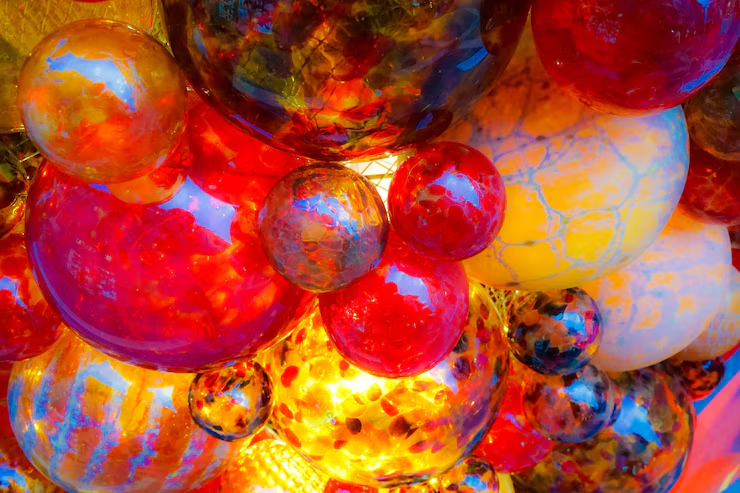
When you hear “Murano glass showroom,” what image flashes in your mind? Perhaps an elegant, sunlit space with glistening chandeliers, delicate vases shimmering like frozen rainbows, and masterfully crafted sculptures that seem to defy gravity. But behind this facade of elegance lies a centuries-old tradition, an intricate business ecosystem, and a luxurious world where art meets commerce. Today, we dive deep into this fascinating realm.
Murano: The Beating Heart of Glassmaking
Before we step into the showroom, we must first journey to the island itself. Murano is a small island near Venice, Italy, where glassmaking has been elevated to an art form for over 700 years. This tiny patch of land is more than just a location; it’s the cradle of a unique craftsmanship tradition that has been passed down through generations like a priceless family secret.
Imagine walking through narrow cobblestone alleys, where the air smells faintly of saltwater mixed with the smoky aroma of hot furnaces. Here, master glassmakers, known as “maestri vetrai,” bend and blow molten silica into exquisite shapes, colors, and textures. The entire island resonates with the clinking sounds of tools shaping what will eventually grace the shelves of prestigious showrooms.
The Anatomy of a Murano Glass Showroom
A Murano glass showroom is not merely a store; it is a curated experience. From the moment you enter, you are enveloped in an ambiance that speaks of luxury, heritage, and impeccable taste. The lighting is meticulously designed to highlight the iridescent qualities of each piece, making them come alive.
There are typically several key sections inside a well-designed showroom:
- Chandelier Galleries: Here hang towering, multi-tiered chandeliers, often custom-made for luxury hotels, palaces, and exclusive residences.
- Sculpture Displays: These showcase abstract forms, animals, and human figures that capture the imagination.
- Tableware & Decor: Vases, bowls, and decorative items that blend functionality with artistry.
- Jewelry Collections: Delicate necklaces, earrings, and bracelets featuring intricate beadwork and unique glass combinations.
Each section tells a story, not just of artistic prowess but also of cultural identity. This is not mass-produced glassware; this is Murano glass, where every piece carries the fingerprint of its creator.
The Business Behind the Beauty
While the aesthetic appeal of Murano glass is immediately apparent, the business mechanics behind a successful showroom are equally fascinating. Operating a Murano glass showroom is akin to managing a luxury brand. Here are some of the critical components:
1. Sourcing and Craftsmanship
The backbone of any Murano glass showroom is its relationship with the artisans. These partnerships are often built over years of trust and mutual respect. Some showrooms own their furnaces, while others collaborate with independent maestri vetrai. Regardless of the model, maintaining quality is non-negotiable.
2. Curation and Design
A showroom’s success hinges on its ability to curate collections that resonate with its clientele. Trends in interior design, color palettes, and even global economic factors influence what sells. For instance, during economic booms, there’s a higher demand for extravagant, large-scale pieces. In contrast, during downturns, smaller, more affordable items gain popularity.
3. Authenticity and Certification
Given the high value of Murano glass, the market is unfortunately riddled with counterfeits. Reputable showrooms provide certificates of authenticity, often including detailed information about the artisan, the technique used, and even a serial number. This transparency is not just good business; it’s essential for maintaining the integrity of the Murano brand.
4. Marketing and Global Reach
Modern Murano glass showrooms are no longer confined to Venice or Italy. With e-commerce, international shipping, and global exhibitions, these showrooms can reach art collectors, interior designers, and luxury retailers worldwide. Digital marketing, high-end photography, virtual showroom tours, and participation in prestigious art fairs are now standard practices.
The Emotional Experience: Why Buyers Fall in Love
Let’s step into the shoes of a potential buyer for a moment. What makes someone spend thousands, sometimes tens of thousands, on a Murano glass piece?
The Story
Buyers are not just purchasing glass; they are investing in history, tradition, and a piece of Venetian culture. Each piece comes with a narrative that makes it more than just a decorative object.
The Craftsmanship
In a world flooded with mass production, the handcrafted nature of Murano glass offers something uniquely personal. The minor variations in color, shape, and texture are not flaws but marks of authenticity.
The Prestige
Owning Murano glass is a statement. It signals refined taste, appreciation for artistry, and an affinity for luxury. In many cases, these pieces become heirlooms, passed down through generations.
The Investment
High-quality Murano glass often appreciates in value. Limited edition pieces, works by renowned maestri vetrai, and historically significant items can command significant sums at auctions and in the secondary market.
Key Techniques That Define Murano Glass
For buyers who are serious about understanding what they are investing in, knowing the techniques adds a layer of appreciation.
1. Blowing (Soffiato)
The classic image of a glassmaker blowing through a long pipe to create hollow objects. This technique allows for delicate shapes and large, lightweight pieces.
2. Millefiori (A Thousand Flowers)
Using cross-sections of multicolored glass canes to create intricate floral patterns, often seen in paperweights and jewelry.
3. Filigrana (Filigree)
Incorporating glass threads to form complex, lace-like patterns within the glass itself.
4. Sommerso (Submerged)
Layering different colors of glass to create depth and dimensionality. This technique is particularly popular for vases and sculptures.
5. Avventurina
Adding copper particles to the glass mixture, resulting in a sparkling, metallic effect that dances in the light.
The Showroom as a Business Venture
If you’re reading this with a business mindset, you might be wondering: What does it take to open or invest in a Murano glass showroom?
Capital Investment
Launching a showroom requires significant upfront investment. Beyond acquiring inventory, you’ll need to budget for an elegant physical space, high-end lighting, climate control (glass is sensitive to temperature and humidity), security systems, and skilled staff.
Building Relationships
Forming strong ties with Murano’s artisans is crucial. This often involves traveling to Murano, participating in industry events, and sometimes even partnering directly with workshops.
Navigating the Market
Understanding your clientele—whether they are private collectors, interior designers, or luxury hotel chains—is essential. Each segment has different needs, preferences, and purchasing behaviors.
Compliance and Authenticity
Operating ethically is paramount. Ensuring that all products are certified and authentic protects both your brand and the broader Murano glass industry.
Marketing Strategy
In today’s digital age, having a sophisticated online presence is as important as a beautiful physical showroom. High-quality photography, virtual tours, SEO-optimized content (like this one!), social media campaigns, and participation in luxury expos can amplify your reach.
The Future of Murano Glass Showrooms
Despite challenges such as competition from cheaper mass-produced glass and economic fluctuations, Murano glass continues to captivate. Several trends are shaping its future:
Sustainability
Eco-conscious production methods are gaining traction. Some showrooms now highlight the use of recycled glass or energy-efficient furnaces, appealing to environmentally aware consumers.
Customization
Bespoke designs tailored to individual client preferences are becoming more common. Clients can collaborate directly with artisans to create one-of-a-kind pieces.
Technological Integration
Virtual reality showroom tours, augmented reality apps that allow clients to visualize pieces in their own spaces, and blockchain-based certificates of authenticity are emerging innovations.
Cultural Collaborations
Partnerships with luxury fashion brands, museums, and designers from other disciplines are introducing Murano glass to new audiences and applications.
Conclusion: The Magic Lives On
A Murano glass showroom is far more than a retail space. It is a sanctuary where art, history, and business converge. For buyers, it offers a chance to own a slice of Venetian legacy. For entrepreneurs, it presents a challenging yet rewarding venture into the world of luxury craftsmanship.
As you step out of such a showroom, whether physically in Venice or virtually online, you don’t just leave with a purchase. You carry with you a story—one that began centuries ago on a small island, where fire and sand come together under the hands of masters to create eternal beauty.
https://shorturl.fm/513KT
https://shorturl.fm/Qo6MX
https://shorturl.fm/Vj5X2
https://shorturl.fm/eSwK5
https://shorturl.fm/s6lDo
Join our affiliate community and start earning instantly!
Get paid for every referral—sign up for our affiliate program now!
Share our products, reap the rewards—apply to our affiliate program!
Promote our products and earn real money—apply today!
https://shorturl.fm/Z6j8n
https://shorturl.fm/6RBZ1
https://shorturl.fm/ePMFr
https://shorturl.fm/DhwJz